
Willy Woo: Stories That Help Children Stay in Control of Their Emotions
Willy Woo’s Book Series, created with the guidance of a psychologist, helps children understand what’s happening inside their bodies when feelings start to rise.
Through playful, easy-to-use techniques, children learn to notice their emotions, stay in control, and express how they feel.
Written in rhyme, the stories are fun to read and help children remember calming tools. The series is perfect for ages 3 to 10, when children are learning to recognise and manage big emotions with confidence.
The very first book in the series is now available on Amazon:
“Willy Woo’s Feeling Angry.”
Letting Children Feel Sadness
Sadness in Children: What Parents Need to Understand
Sadness is not a sign that something is wrong with your child. It is a normal, healthy emotional response. In fact, psychologists agree that sadness plays a crucial role in helping children learn resilience, self-awareness and connection.
Children feel sad when they experience loss, disappointment or overwhelm. Their bodies slow down, their minds turn inward, and they naturally seek comfort from the people they trust. This is how emotional learning happens.
When parents allow sadness instead of trying to stop it, children learn to recognise their feelings, ask for help and recover in a regulated way.
What Happens When Children Are Not Allowed to Feel Sad
Many parents say, “I just do not want my child to be upset.” The intention is loving, but the impact is harmful. When children are told to stop crying, cheer up or be brave too quickly, the message they receive is: “Your feelings are not acceptable.”
Psychological research shows that blocking sadness leads to predictable problems.
1. They bottle their emotions
Suppressed sadness does not disappear. It builds tension inside the body. These children are more likely to develop anxiety or sudden emotional outbursts because the feelings have no safe way out.
2. They struggle to understand themselves
If a child never practises sadness, they never learn to recognise it or communicate it. As they grow older, they often say, “I do not know what I feel,” because they were never given space to learn.
3. They show more behavioural issues
Unprocessed sadness often comes out as anger, irritability or tantrums. It is not bad behaviour. It is a child carrying a feeling they have not been allowed to express.
4. They develop shame around vulnerability
Children quickly learn that crying or being upset gets judged or shut down. This can lead to perfectionism, people pleasing and a fear of making mistakes.
5. They find it harder to build close relationships
Children build trust through moments of sadness and comfort. If they never have that, they struggle with emotional closeness in friendships and family relationships later on.
What Parents Can Do Instead
Here is the simple truth. You do not need to fix sadness. You need to guide your child through it.
Psychologists call this emotion coaching. It means:
• stay present
• name the feeling
• validate what your child is experiencing
• guide them towards coping skills
• reconnect when they are calm
A child who learns “it is safe to feel sad and I know how to handle it” becomes a child who grows into a resilient, emotionally capable adult.
A Short Version for Parents to Keep in Mind
Sadness is not a problem to fix. It is a skill to practise. When your child is sad, you are not failing them. You are being offered a moment to teach connection, emotional safety and resilience.
Understanding Emotional Development: The Key to Helping Children Thrive
The Importance of Emotional Development in Children: Why It Matters More Than We Think
When we think about child development, we often picture milestones like learning to walk, reading their first book, or mastering simple math. But behind every step in a child’s growth lies something even more fundamental: emotional development. Understanding and supporting children’s emotional growth is one of the most powerful ways to help them thrive, not only now, but throughout their entire lives.
What Is Emotional Development?
Emotional development refers to a child’s ability to recognise, express, and manage their emotions. Children begin building this skill from birth through interactions with caregivers, their environment, and later, peers and teachers.
It includes:
- Identifying emotions (happy, sad, angry, scared)
- Understanding why emotions happen
- Expressing feelings in healthy ways
- Developing empathy (understanding others’ emotions)
- Learning to regulate emotions like Anger or Sadness
This process shapes the foundation of a child’s personality, social behaviour, and mental well-being.
🧠 Why Emotional Development Is So Important
1. It Helps Children Understand Themselves
Children who can label and understand their emotions are better able to navigate daily challenges. They know what they’re feeling and why, which increases self-awareness and confidence.
2. It Strengthens Social Skills
Emotionally developed children are more likely to:
- Make friends easily
- Share and cooperate
- Show empathy
- Resolve conflicts calmly
These social skills are essential for school success and healthy relationships.
3. It Supports Learning and Brain Development
A child who feels emotionally safe can think more clearly, stay focused, and learn more effectively. Studies show that emotional regulation greatly improves:
- Attention span
- Problem-solving
- Memory
- Motivation
A balanced emotional state helps children overcome challenges instead of being overwhelmed by them.
4. It Builds Resilience
Life is full of ups and downs—even for children. Emotional development teaches them how to cope with:
- Changes in routine
- Disappointments
- Peer issues
- Mistakes and failures
Resilient children bounce back quicker and adapt to new situations more easily
5. It Reduces Behavioural Problems
Many behavioural issues stem from unexpressed or misunderstood emotions. When children have emotional tools, they’re less likely to:
- Have frequent tantrums
- Act out aggressively
- Withdraw socially
Teaching emotional literacy is often the key to improving behaviour.
👨👩👧 How Parents and Caregivers Can Support Emotional Development
Supporting emotional development doesn’t require special training—it simply needs everyday awareness and connection.
1. Name Their Feelings
Help children identify emotions:
“It looks like you’re feeling frustrated because the block tower fell.”
This teaches vocabulary and emotional awareness.
2. Validate Them
Let them know their feelings are normal:
“It’s okay to feel sad. Everyone feels sad sometimes.”
Validation creates emotional safety.
3. Model Healthy Emotional Behaviour
Children learn more by watching than by listening.
If you manage stress calmly, they will too.
4. Encourage Open Communication
Create a home environment where emotions are welcomed:
- Ask open-ended questions (for smaller children, ask them about specific things, e.g. what happened at first break today)
- Encourage them to talk about their day
- Praise them when they express feelings appropriately
5. Teach Coping Strategies
Simple techniques include:
- Deep breathing
- Counting to ten
- Taking a break
- Drawing how they feel
These skills help children calm down before emotions escalate
Final Thoughts
Emotional development is not just another aspect of childhood growth—it’s the heart of it. When children learn to understand and manage their emotions, they build stronger relationships, perform better academically, and develop into compassionate, resilient adults.
By nurturing emotional development from an early age, we’re giving children one of the greatest gifts possible: the ability to thrive in a complex, ever-changing world.
Interpreting Emotional Cues in Children
Understanding Anger in Children: The Body’s Way of Asking for Help
Children experience emotions deeply, and those emotions often show up in their bodies before they can find the words to explain them. When a child feels scared, angry, or excited, their body reacts; their heart beats faster, their tummy tightens, or their face turns red. These physical changes are the body’s way of saying, “I’m feeling something big right now.” Because young children are still learning about their emotions, they often show what they feel through actions instead of words. Crying, shouting, running away, or refusing to do something are not signs of being “bad”; they’re signs that a child’s body and emotions are trying to cope with something they don’t yet understand.
🔥 The Feeling of Anger: Energy That Rises Through the Body
Anger is one of the strongest emotions a child can feel. It’s not a “bad” feeling; it’s a powerful one. Anger’s job is to protect, to speak up, to say “This is not okay.” But because children are still learning how to manage that power, anger can sometimes explode into actions like shouting, hitting, or kicking.
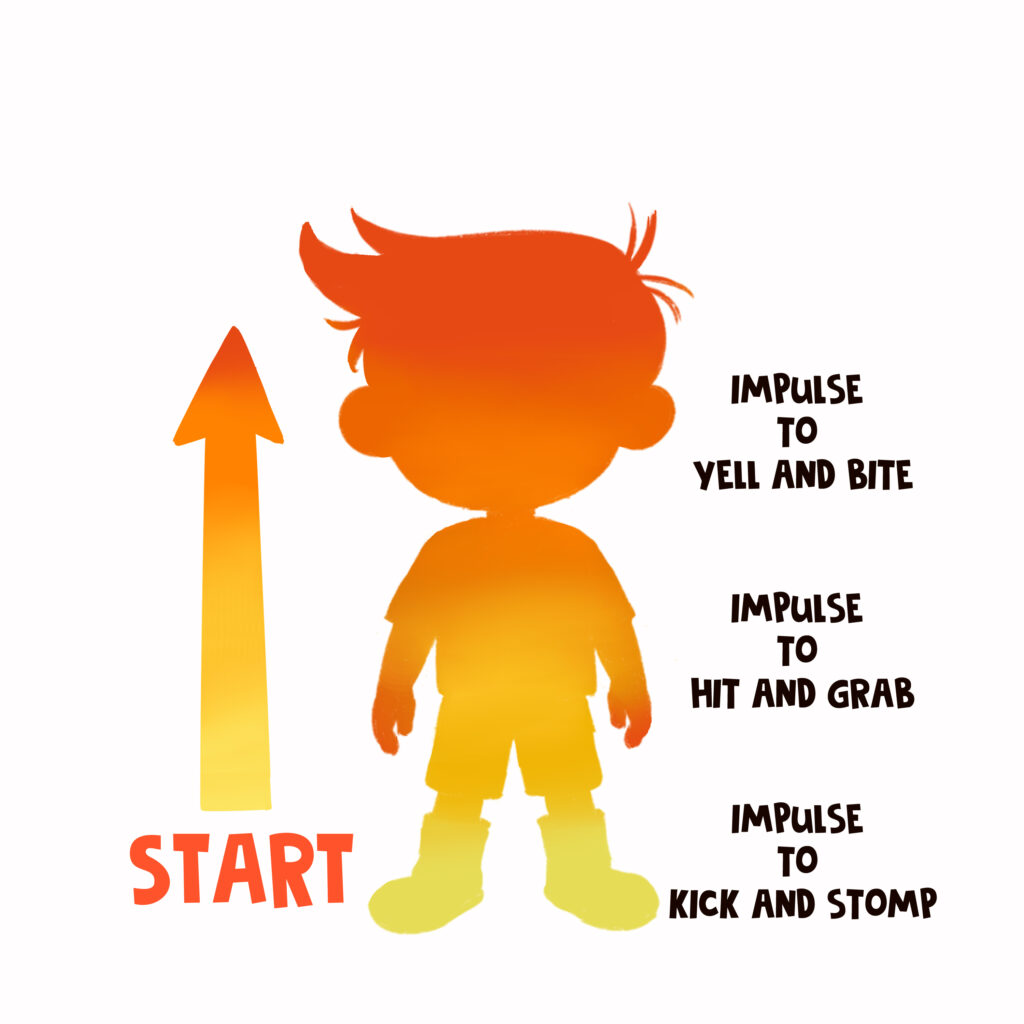
When anger begins, it often starts as a heat in the body. Some people describe it as a “heat pathway.” It can begin in the feet, a small pulse or tightness that starts to rise upward through the body. The energy flows faster, the hands may clench, the face gets warm, and the breathing becomes quick and shallow. This is the body’s way of preparing to act. It’s a burst of energy designed to protect and defend.
For children, that rising heat can feel overwhelming. Their bodies fill with energy, but their brains don’t yet know what to do with it. That’s when the impulses come, the urge to yell, to throw, to stomp, to hit, or to kick. These impulses aren’t chosen; they’re automatic (primal) reactions to the wave of emotion moving through the body. The key is not to shame these impulses, but to help children notice them before they take control.
🧠 Helping Children Notice Anger in Their Bodies
When we teach children to recognise anger as a physical feeling, not a behaviour, we give them the power to pause. You can guide them to notice:
- “Can you feel where the heat is in your body right now?”
- “Does your face feel hot? Are your hands tight? Is it rising energy?”
This helps us shift from labelling the child as being angry to helping the child notice anger. That small shift builds awareness and self-control and stops the child from building an identity as their anger. When a child learns to recognise these signals early, the tight jaw, the hot face, the strong legs- they can learn ways to cool their body before the impulse takes over.
🌬️ Cooling the Heat of Anger
Once children notice the “heat rising,” they can learn gentle ways to cool it down:
- Breathing: Encourage slow, deep breaths, in through the nose, out through the mouth — like blowing out a candle.
- Movement: Help them move the energy safely, stomp their feet, squeeze a soft toy, or shake out their hands.
- Water: Washing hands or splashing cool water on the face can help the body reset.
- Words: Teach them to say, “I feel really angry right now,” instead of acting on the impulse. Naming the feeling gives it shape and helps release its power.
Each of these steps helps the body move from “reacting” to “responding.” Over time, children learn that anger doesn’t have to explode — it can be understood, guided, and expressed in healthy ways.
💬 The Role of Adults
Our role is not to stop anger, but to help children understand it. When we meet their anger with calmness, we show them that it’s safe to feel strong emotions. We can say, “I can see you’re angry. Let’s notice what your body is doing,” instead of “Stop being angry.” This helps the child feel seen and supported rather than judged.
Children learn emotional safety not from being told to “calm down,” but from being helped to find calm within themselves. When we teach them that anger is energy that rises and falls, that it’s something they can notice, breathe through, and let go of, we’re giving them tools for life.
🌿 In the End
Anger is not the enemy; it’s a messenger. It tells us that something feels unfair, uncomfortable, or out of control. When children learn to listen to that message, to notice the heat, the urge to move, they begin to understand their own bodies. With our help, they can learn to pause, breathe, and express what they feel in ways that are safe and kind.
When we teach children to notice their anger instead of fearing it, we’re helping them build emotional intelligence, self-awareness, and confidence that will guide them through every challenge ahead.
The Very First Book of Willy Woo’s Feeling Angry helps children understand what’s happening inside their bodies when anger arises. Through playful and easy-to-use techniques, it teaches children how to notice and manage their feelings.
Written in rhyme, the story is fun to read and helps children remember their calming tools. This book is especially suited for ages 3 to 10, a stage when children are learning to recognise their emotions and can use simple, engaging steps to handle big feelings with confidence.
The Very First Book of Willy Woo’s Feeling Angry is now available on Amazon.