
Understanding Anger in Children: The Body’s Way of Asking for Help
Children experience emotions deeply, and those emotions often show up in their bodies before they can find the words to explain them. When a child feels scared, angry, or excited, their body reacts; their heart beats faster, their tummy tightens, or their face turns red. These physical changes are the body’s way of saying, “I’m feeling something big right now.” Because young children are still learning about their emotions, they often show what they feel through actions instead of words. Crying, shouting, running away, or refusing to do something are not signs of being “bad”; they’re signs that a child’s body and emotions are trying to cope with something they don’t yet understand.
🔥 The Feeling of Anger: Energy That Rises Through the Body
Anger is one of the strongest emotions a child can feel. It’s not a “bad” feeling; it’s a powerful one. Anger’s job is to protect, to speak up, to say “This is not okay.” But because children are still learning how to manage that power, anger can sometimes explode into actions like shouting, hitting, or kicking.
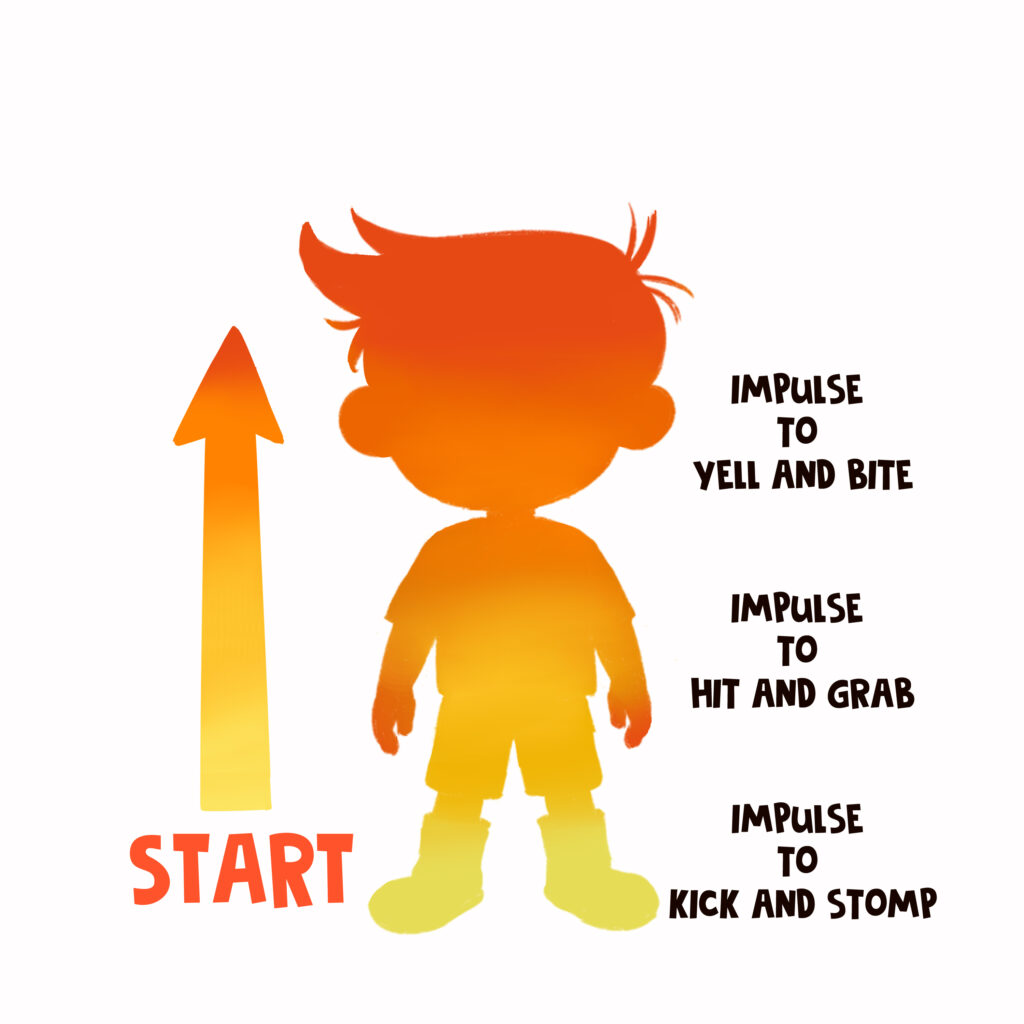
When anger begins, it often starts as a heat in the body. Some people describe it as a “heat pathway.” It can begin in the feet, a small pulse or tightness that starts to rise upward through the body. The energy flows faster, the hands may clench, the face gets warm, and the breathing becomes quick and shallow. This is the body’s way of preparing to act. It’s a burst of energy designed to protect and defend.
For children, that rising heat can feel overwhelming. Their bodies fill with energy, but their brains don’t yet know what to do with it. That’s when the impulses come, the urge to yell, to throw, to stomp, to hit, or to kick. These impulses aren’t chosen; they’re automatic (primal) reactions to the wave of emotion moving through the body. The key is not to shame these impulses, but to help children notice them before they take control.
🧠 Helping Children Notice Anger in Their Bodies
When we teach children to recognise anger as a physical feeling, not a behaviour, we give them the power to pause. You can guide them to notice:
- “Can you feel where the heat is in your body right now?”
- “Does your face feel hot? Are your hands tight? Is it rising energy?”
This helps us shift from labelling the child as being angry to helping the child notice anger. That small shift builds awareness and self-control and stops the child from building an identity as their anger. When a child learns to recognise these signals early, the tight jaw, the hot face, the strong legs- they can learn ways to cool their body before the impulse takes over.
🌬️ Cooling the Heat of Anger
Once children notice the “heat rising,” they can learn gentle ways to cool it down:
- Breathing: Encourage slow, deep breaths, in through the nose, out through the mouth — like blowing out a candle.
- Movement: Help them move the energy safely, stomp their feet, squeeze a soft toy, or shake out their hands.
- Water: Washing hands or splashing cool water on the face can help the body reset.
- Words: Teach them to say, “I feel really angry right now,” instead of acting on the impulse. Naming the feeling gives it shape and helps release its power.
Each of these steps helps the body move from “reacting” to “responding.” Over time, children learn that anger doesn’t have to explode — it can be understood, guided, and expressed in healthy ways.
💬 The Role of Adults
Our role is not to stop anger, but to help children understand it. When we meet their anger with calmness, we show them that it’s safe to feel strong emotions. We can say, “I can see you’re angry. Let’s notice what your body is doing,” instead of “Stop being angry.” This helps the child feel seen and supported rather than judged.
Children learn emotional safety not from being told to “calm down,” but from being helped to find calm within themselves. When we teach them that anger is energy that rises and falls, that it’s something they can notice, breathe through, and let go of, we’re giving them tools for life.
🌿 In the End
Anger is not the enemy; it’s a messenger. It tells us that something feels unfair, uncomfortable, or out of control. When children learn to listen to that message, to notice the heat, the urge to move, they begin to understand their own bodies. With our help, they can learn to pause, breathe, and express what they feel in ways that are safe and kind.
When we teach children to notice their anger instead of fearing it, we’re helping them build emotional intelligence, self-awareness, and confidence that will guide them through every challenge ahead.
The Very First Book of Willy Woo’s Feeling Angry helps children understand what’s happening inside their bodies when anger arises. Through playful and easy-to-use techniques, it teaches children how to notice and manage their feelings.
Written in rhyme, the story is fun to read and helps children remember their calming tools. This book is especially suited for ages 3 to 10, a stage when children are learning to recognise their emotions and can use simple, engaging steps to handle big feelings with confidence.
The Very First Book of Willy Woo’s Feeling Angry is now available on Amazon.